The conditions: Uterine fibroids
Uterine fibroids are a common type of benign (non-cancerous) tumor that develops inside the uterus. Fibroids appear in one third of the female population and are the main reason for undergoing hysterectomy (complete removal of the uterus). One in five women over the age of 35 has uterine fibroids.
Fibroids can gradually contract and merge into a single mass with unpleasant consequences. However, the symptoms caused by fibroids include excessive menstrual bleeding, pelvic pain and infertility.
Treatment: Myomectomy
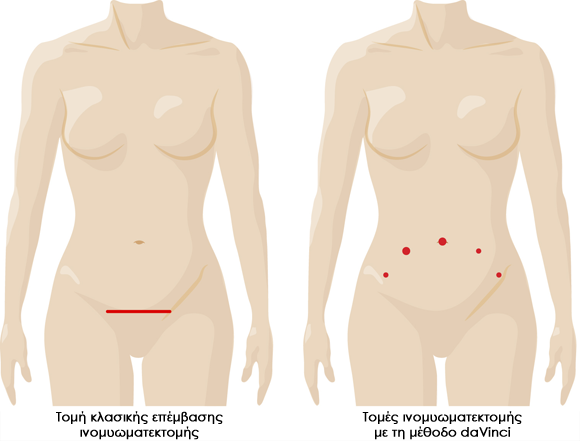
An alternative to hysterectomy in this case is myomectomy, which is the surgical removal of fibroids. This procedure preserves the uterus and is mainly recommended for women who wish to conceive. Myomectomy is usually performed through a large abdominal incision.
After removing each fibroid, the surgeon carefully reconstructs the inside of the uterus to eliminate possible bleeding that could cause postoperative complications. The reconstruction of the uterus is equally important because it reduces the risk of uterine rupture during pregnancy.
daVinci Myomectomy: A minimally invasive method
This method uses the most advanced technological development in medicine, the daVinci robotic surgical system. This system is designed to assist the surgeon in performing a more precise and minimally invasive surgery, aiming at the best possible preservation of the uterus.
The advantages of this treatment compared to traditional surgical approaches are:
- Shorter hospital stay
- Less pain
- Lower risk of infection
- Less blood loss and reduced need for transfusion
- Better cosmetic result
- Faster recovery and return to normal activities
- Preservation of the uterus
As with any surgical procedure, these benefits cannot be guaranteed, as they depend on the patient’s clinical condition.